Gaia and the Anthropocene
In "Gaia and the Anthropocene" by Bruno Latour, I first noticed his perspectives and comments on the construction of facts. There is a sense of epistemic humility pointing out that the way we engage and perceive the world is not outside our limited scope or influence. We can only know what we subjectively experience and that means we collectively construct facts and attribute meaning to them as subjective agents. This alludes to an intersubjective reality beyond an individual subjective experience.
Yet, as Latour pointed out, this same epistemic humility can be taken so far as to allow people to ignore large bodies of science and fact, such as with climate change. The data, though influenced by social forces, is still reliable information concerning the current state of affairs. There are those that are inclined to take social constructivism so far that we are seeing the beginning of a post-truth world. In a post-truth world, even science is no longer persuasive for those that don't want to accept evidence that disconfirms their existing biases. The lines and boundaries between fact and fiction, knowledge and opinion, subjectivity and objectivity begin to break down.
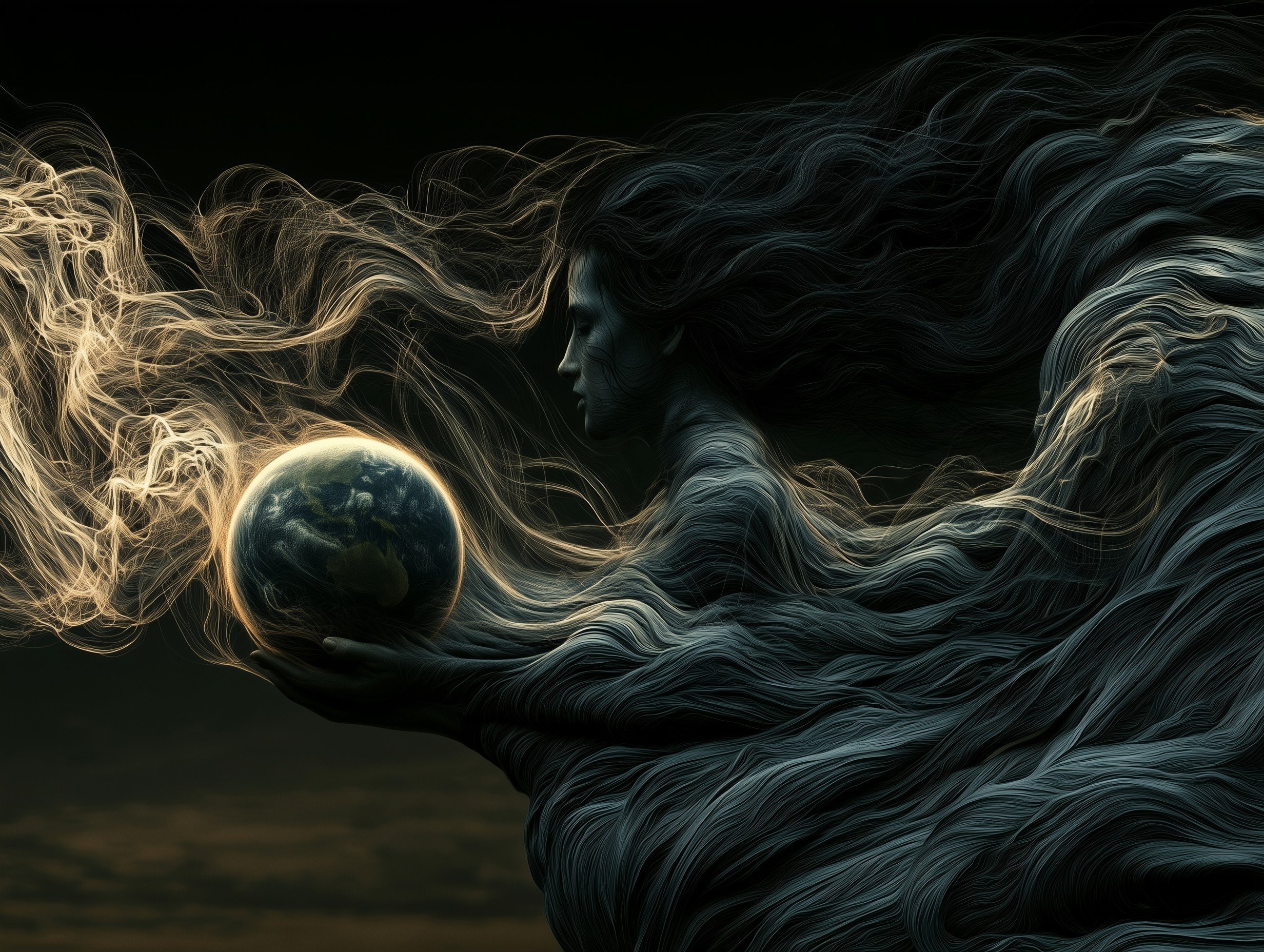
However, Latour continues to discuss the breakdown of the subject and object distinction, which is quite fascinating. To me this epitomizes what posthumanist philosophers are trying to break down in humanist philosophy. Humans have mostly thought of themselves as the subject while everything else is an object, such as earth or nature, as if we stood distinctly different from the earth and materials that gave birth to our species. But we are, hopefully, beginning to see the earth as a subject in and of itself. This is demonstrated in the animation of the earth into a personified agent.
I like the way Latour quoted James Lovelock. He called the consequences of our actions "the revenge of Gaia." I appreciate this because the narrative often talked about climate change is one of us protecting the planet as benevolent stewards over this earth, but "the revenge of Gaia" is a much different message. We don't need to protect the awesome power of the earth. We will die and the earth will go on without us, just as it did with the dinosaurs. The earth has continued on even when species have been starved into extinction. Gaia will go on, but we will not. If anyone needs protection, it is us. We need protection against our own stupidity in abusing our own resources, home, and planet. "The revenge of Gaia" is the animated consequence of both our ignorance and hubris.
This also brings up interesting ideas of agency. What is an agent? How does it act? What does an agent do? As Latour pointed out, so long as things "act" they are agents. In this case, Gaia is not the earth itself but an animated agent capable of acting. This is the story we tell, because we are indeed storytellers. If we don't consider the earth as an agent along with ourselves, we are telling an incomplete story. A true intersubjective reality, epistemology, and ontology would include all agents—not only all humans, but animals, earth, objects and subjects, geology, cosmology. Agency in this sense is a wholistic ontology and epistemology.
