I am Art: Part II
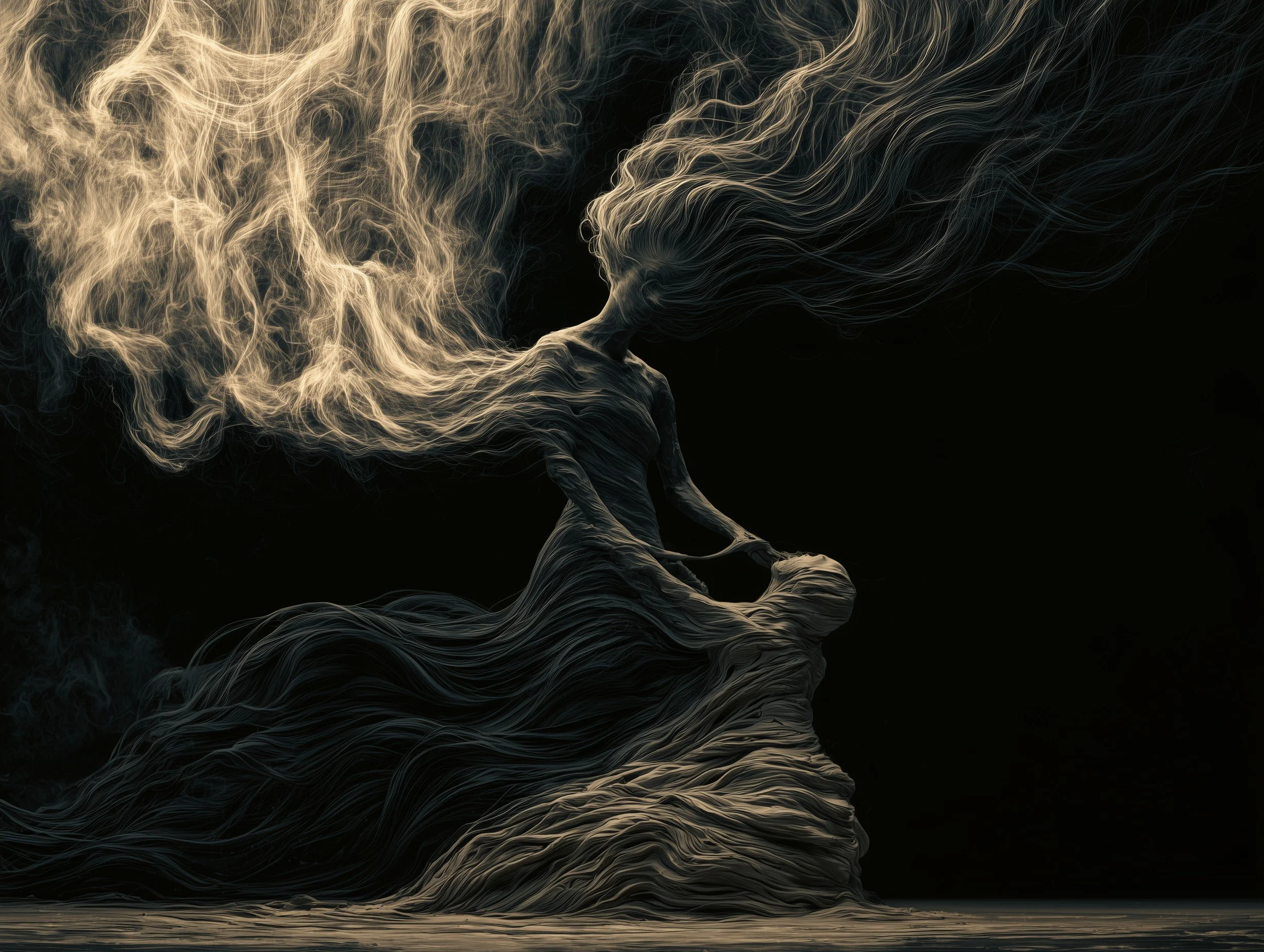
I've said it once and I'll say it again. If I weren't a transhumanist, I'd likely be a luddite. I resist change. I resisted technology. I resist what is unfamiliar. I could go to the same restaurant every Friday night, sit at the same table, order the same meal, and be more than pleased with its predictability. I am not a technologist. I'm not even an early adopter of new tech. I adopt once the alternative is no longer viable.
My resistance toward AI was no exception. The zeitgeist warned that AI was equal parts stupid and dangerous—AI produced terrible art and yet was the greatest threat to our species. Critics of AI-generated art claimed it wasn't real art. Just slop. It would be naive to think these voices didn't influence my perceptions of AI-generated art and AI in general, but they weren't my primary concern. If Marcel Duchamp can place a urinal on a pedestal and call it "readymade art" then AI-generated art is already real art.
My body—the body I had just reconnected with—was telling me a different story. My body was telling me danger. AI is dangerous. All AI. Stay away. It took a major crisis for me to disconnect from the digital world and reconnect with myself. I disappeared for three years to touch grass—literally. I was happy resting in my garden, and I had no interest in leaving. The gate was shut, locked, and barricaded.
I continued to make art. I tended my garden. I drew on an old sketch pad with fresh ink pens. I dusted off my digital SLR and started taking photos again. I opened tubes of oil paint and tenderly stroked a stretched canvas with my brush. I even picked up a new medium: collage. I had never worked with collage and thought I'd give it a try. I picked up old magazines and books at local thrift shops and began cutting and pasting. I liked working with scissors, glue, and paper. Art felt like play again, just like my childhood art. Nothing serious. Nothing dangerous. Just play.
As I played with paper, scissors, and glue, an idea was formulating. This series had potential. The unexpected assemblage of a theological narrative was being serendipitously engendered. The art I was making wasn't created for esthetic beauty. It was created to provoke. This was art, yes, but this was art worthy of a book. The theological narrative behind the art needed academic structure. Yet, I hadn't touched theology—my word art—in years. I was rusty. I was ready to reach for word art again but didn't know how to access it without being pierced by the digital world. My body recoiled at the idea of anything more than a Google search. Yet, Google didn't have the expertise I needed for my queer, Mormon, transhumanist theological imaginings.
I needed a specialist.
