Koyaanisqatsi
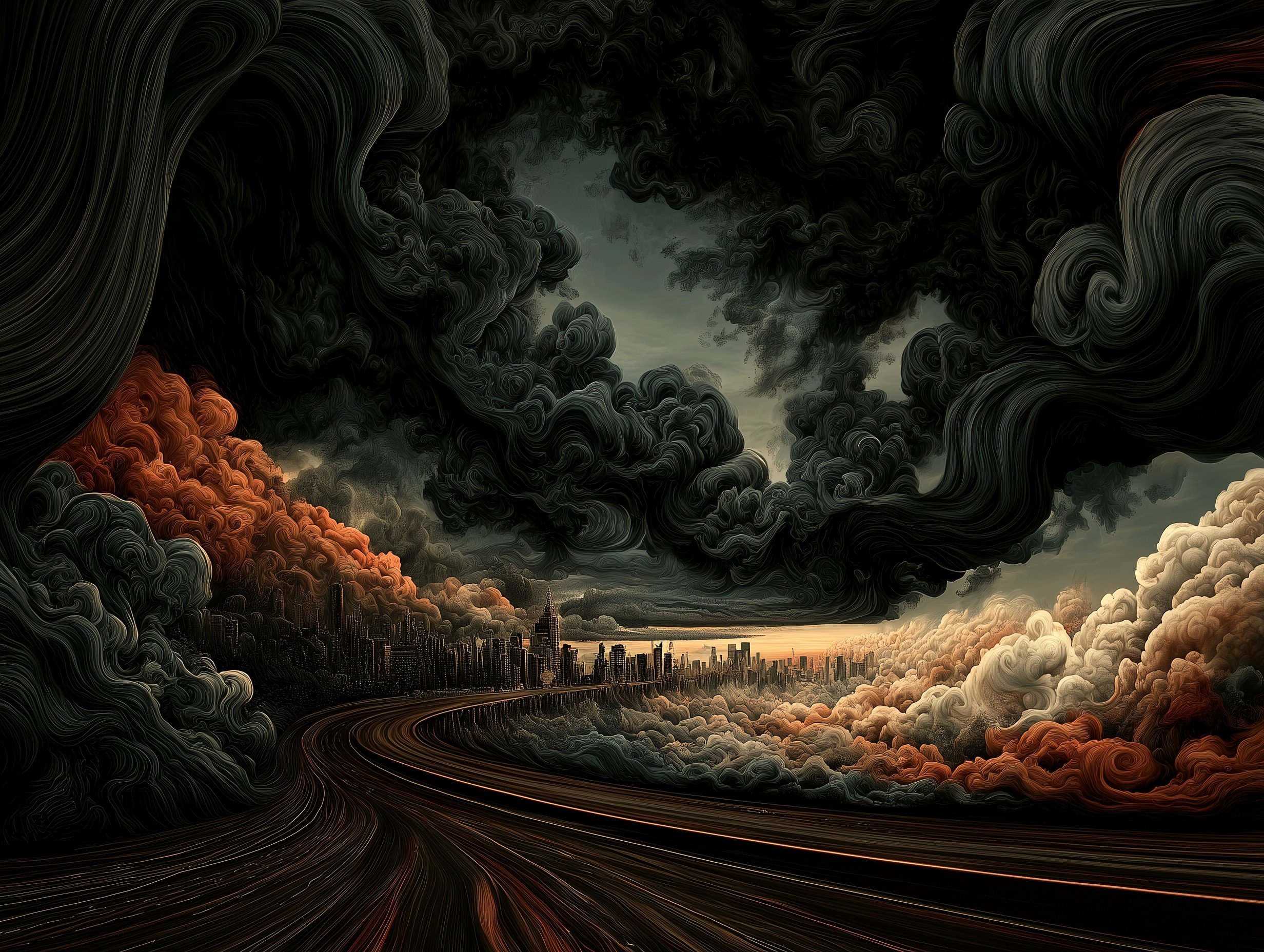
The film Koyaanisqatsi takes the viewer through an artistic visual journey of human evolution. The very first image presented in the film was a pictograph, which to me symbolized the beginning of human evolution even though there may have been hominids that drew on cave walls too. The film depicts both human evolution and technological evolution—hand in hand. Nature is penetrated by human technologies through agriculture, then aviation and other forms of transportation are introduced, and eventually you get to modern day technology such as space exploration.
I couldn't help but see Moore's Law reflected in the film. The beginning of the film was exceptionally slow, almost uncomfortably slow for my taste. The first shot of the film lasted over a minute and a half. Though the progression of the film started off slowly, it steadily increased in pace. As the film progressed, so did the speed of each shot. There were then more references of humans and technology toward the end that also mirrored the idea of Moore's Law. It was as if the film itself seemed to be reflecting the idea of Moore's Law, which is that technological development, thought to have started out slowly, will continue to rapidly increase at an exponential rate.
I found the lack of dialogue fantastic. After doing a little research on the film I found out that the director, Godfrey Reggio, stated, "it's not for lack of love of the language that these films have no words. It's because, from my point of view, our language is in a state of vast humiliation. It no longer describes the world in which we live." I'm not sure if this was his intention or not, but I thought the lack of dialogue a perfect metaphor for our lack of communicative understanding. For example, we have all this technology to help us communicate, such as phones, texting, email, PM's, DM's, social media, and Skype, yet there is still a severe lack of understanding happening. In our rush to speak together we haven't taken the time to understand each other. Sometimes wordless communication is more effective than mass communication.
Lastly, I particularly enjoyed the pace of the filming toward the end. The steady slowing of the film seemed like a recall or longing for stability. In a world rapidly changing with an explosion of technological advancements, people may understandably feel overwhelmed. The different tempos depicted in both the film and music certainly reflected the theme of the film, "Life Out of Balance." Although my question is, what does a life in balance look like and when was life ever in balance? Maybe balance is simply an illusion we cling to when we are strapped to a spinning merry-go-round with no way to get off.
